A luxury vehicle’s interior can look immaculate at first glance while showing early signs of deterioration in the places owners use most. The outer edge of a driver’s seat may begin to lose its finish. A frequently touched steering wheel can develop a different texture from the surrounding leather. Piano-black trim may collect fine scratches, while dashboard surfaces gradually change in appearance after repeated sun exposure.
These changes do not all require restoration, but they should not all be treated with the same cleaning product or maintenance routine.
For luxury and collector vehicles in Miami, effective interior maintenance begins with understanding the materials, identifying how they are aging, and choosing the appropriate level of care before a minor condition becomes a larger restoration project.
Why luxury interiors require material-specific care
A modern luxury vehicle can combine several materials within a relatively small cabin. Natural leather, coated leather, Alcantara, suede, wood veneer, carbon fiber, brushed metal, and piano-black finishes each have different characteristics.
A product that is appropriate for one surface may be unsuitable for another. Even within leather interiors, the correct treatment depends on the finish and the manufacturer’s specifications.
This is why interior maintenance should begin with material identification rather than the assumption that every surface needs conditioning or polishing.
A useful way to approach the cabin is to divide it into three categories:
- Contact surfaces: Seat bolsters, steering wheels, armrests, door pulls, and frequently touched controls.
- Visual surfaces: Dashboard panels, decorative trim, screens, wood veneer, and exposed carbon fiber.
- Environmental surfaces: Carpets, floor mats, headliners, and areas exposed to moisture, dust, or accumulated debris.
Each category experiences different forms of wear. Managing them separately helps prevent unnecessary treatments and makes it easier to identify where professional attention is warranted.
The most overlooked areas of luxury car interiors
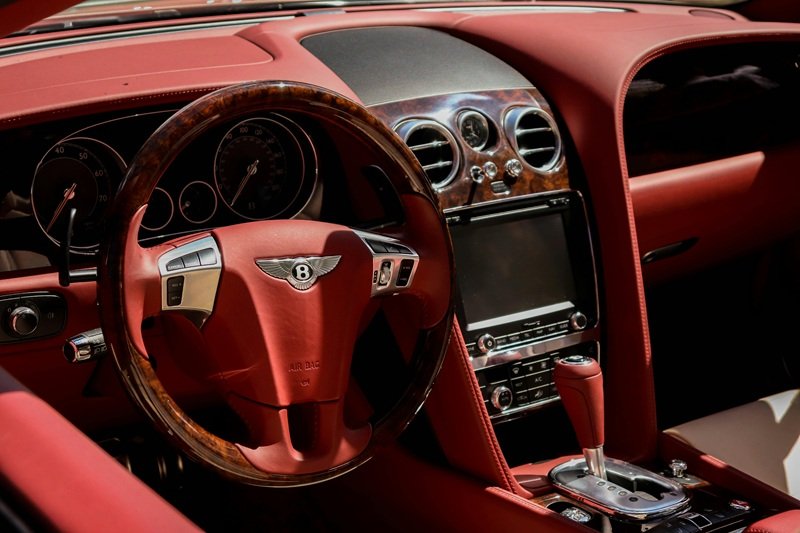
1. Seat bolsters and frequently used leather surfaces
The outer bolster of a driver’s seat often experiences more repeated contact than the center seating area. Entering and leaving the vehicle creates friction in the same location, gradually affecting the surface.
Look for changes in texture, localized discoloration, creasing, or areas where the finish appears different from the surrounding material.
The important distinction is between normal use and actual material damage. Cleaning may improve the appearance of accumulated dirt, but it cannot necessarily correct worn coatings, deep scratches, or damaged leather.
Before applying a conditioner, cleaner, or repair product, the leather type and finish should be identified.
2. Steering wheels and armrests
Steering wheels and armrests receive frequent contact from hands, skin oils, sunscreen, and other everyday contaminants.
These surfaces can become shiny or uneven in appearance. That change is not automatically evidence that the material needs more conditioning. It may reflect accumulated residue, wear to the original finish, or a combination of both.
Aggressive cleaning can make the condition worse. A material-appropriate assessment should determine whether the surface needs cleaning, finish correction, or specialist restoration.
3. Dashboard and decorative trim
Dashboard surfaces and decorative panels can be particularly sensitive to unsuitable products, repeated friction, and prolonged environmental exposure.
Wood veneer, carbon fiber, brushed metal, and piano-black finishes should not be treated as interchangeable materials.
For example, fine marks on piano-black trim may be visible even after routine cleaning. Wood veneer may require attention if its finish begins to deteriorate or the material shows signs of separation.
The goal should be to preserve the original finish wherever practical, rather than automatically replacing or refinishing a component.
4. Alcantara, suede, and specialty upholstery
Specialty upholstery requires a different approach from conventional leather. Its texture and appearance can change when exposed to unsuitable cleaning methods, excessive moisture, or repeated friction.
Owners should avoid assuming that a leather cleaner or conditioner is suitable for Alcantara or suede.
When these materials show staining, flattening, discoloration, or texture changes, the correct treatment should be determined by a provider familiar with that specific material and the vehicle manufacturer’s guidance.
Miami’s climate and the condition of a vehicle’s interior
Interior preservation in South Florida requires attention to more than visible dirt.
Heat, direct sunlight, humidity, and the conditions in which a vehicle is parked can all influence the cabin over time. A vehicle kept in a shaded, controlled environment may experience different exposure from one regularly parked outdoors or left unused in a garage with inconsistent environmental conditions.
For collectors and owners with multiple vehicles, the difference between driving frequency and exposure time is particularly important.
A vehicle that is rarely driven is not necessarily protected from interior deterioration. Its cabin can still be exposed to environmental conditions while stationary.
This is one reason interior maintenance should be coordinated with the vehicle’s storage and usage arrangements, rather than scheduled only around mileage or the number of times it is driven.
The maintenance decision that can prevent unnecessary restoration
One of the most common mistakes in luxury interior care is treating every visible change as a cleaning problem.
A better approach is to identify what has actually changed before deciding what should be done.
| What you notice | What should be evaluated |
|---|---|
| Dull or dirty leather | Surface contamination, finish condition, and material compatibility |
| Shiny seat bolsters | Accumulated residue versus wear to the original finish |
| Fine marks on piano-black trim | Surface condition and whether correction is appropriate |
| Staining on specialty upholstery | Material type, stain source, and previous treatments |
| Fading or discoloration | Environmental exposure and the condition of the original finish |
| Cracking or peeling | Whether the material or its protective finish has deteriorated |
| Persistent musty odor | Possible moisture source or contamination requiring further investigation |
The distinction matters because cleaning, maintenance, and restoration solve different problems.
Cleaning removes contamination. Maintenance helps preserve a material that remains in serviceable condition. Restoration addresses deterioration that routine care cannot correct.
Using a more aggressive cleaning product does not turn a restoration problem into a maintenance problem.
How to build a practical interior maintenance schedule
A useful maintenance schedule should reflect how the vehicle is actually used and stored.
Rather than applying the same interval to every vehicle, consider these factors:
After regular use
Pay attention to frequently touched surfaces, visible spills, accumulated debris, and changes around the driver’s seat and steering wheel.
Address spills appropriately and avoid leaving contaminants on sensitive surfaces for extended periods.
During periodic vehicle reviews
Review seat bolsters, dashboard finishes, decorative trim, carpets, and specialty upholstery.
Look for changes from the vehicle’s previous condition rather than judging each surface in isolation. Photographs taken under similar lighting can help document gradual changes.
Before and after extended periods of inactivity
For vehicles that remain unused for weeks or months, consider the environment in which they are kept, the condition of the cabin, and any manufacturer-recommended storage requirements.
A vehicle’s interior should not be assumed to remain unchanged simply because it has not been driven.
When a material begins to deteriorate
Stop treating the affected area as a routine cleaning task. Have the material assessed before applying additional products or attempting a repair.
This is especially important for original leather, specialty upholstery, and trim components in rare or high-value vehicles.
When seat rejuvenation or interior restoration makes sense
Not every worn seat needs to be replaced, and not every surface can be returned to its original condition through cleaning.
Depending on the material and extent of deterioration, a specialist may recommend cleaning, localized repair, refinishing, color restoration, or replacement.
For collector vehicles, there is an additional consideration: originality.
A replacement component may look newer, but preserving the original material may be preferable when its condition and repairability allow it. This decision should take into account the vehicle, its interior specification, the extent of damage, and the owner’s preservation priorities.
Before authorizing work, ask the specialist:
- Can the original material be retained?
- Is the damage limited to the surface finish, or does it extend into the material?
- Will the proposed treatment change the original texture, color, or appearance?
- Is the repair localized, or will surrounding panels also require attention?
- What will the finished result realistically look like?
- Can the work and materials used be documented?
These questions help owners evaluate the proposed outcome before committing to a repair.
Why documentation matters for collector interiors
For a collector vehicle, interior condition is part of its overall ownership history.
Keeping a record of interior treatments, repairs, material replacements, and restoration work creates a clearer picture of how the cabin has been maintained.
Useful records may include:
- Photographs of the interior before and after specialist work.
- The date and scope of each service.
- Materials or components repaired or replaced.
- Products or treatments used, where documented by the provider.
- Any recommendations for future care.
This is particularly useful when several vehicles are maintained over time or when ownership responsibilities are shared with staff, family offices, or collection managers.
The objective is not simply to record that a vehicle was detailed. It is to understand what was done, why it was done, and whether the original materials were preserved.
Interior maintenance as part of complete vehicle management
Interior care is one part of maintaining a luxury or collector vehicle. Its requirements can overlap with detailing, restoration, storage, transportation, and broader ownership coordination.
Andromeda Crown helps collectors and owners coordinate automotive care through selected service providers and facilities. We consider the vehicle’s condition, ownership requirements, usage, and location when organizing the appropriate services.
For owners managing several vehicles, this approach also helps maintain a consistent record of work and outstanding requirements across the collection.
Explore our automotive asset management services for a broader approach to vehicle oversight.
For routine appearance care, see our mobile car detailing in Miami. When an existing cabin problem requires more than routine care, our guide to car interior deep cleaning in Miami explains the distinction.
Frequently asked questions about luxury car interior maintenance
1. How often should a luxury car interior be maintained in Miami?
There is no single interval that applies to every vehicle. Frequency depends on the materials, how often the car is driven, passenger use, sun exposure, and storage conditions. Frequently touched areas may need attention more often than decorative surfaces.
2. Does leather conditioner prevent all seat cracking?
No. Conditioning is not a universal solution for every leather finish or type of deterioration. Existing wear, damaged coatings, and cracking may require a material-specific assessment rather than additional conditioning.
3. Can Alcantara be cleaned like leather?
No. Alcantara and other specialty upholstery materials require care appropriate to their composition and finish. Products intended for conventional leather should not automatically be used on them.
4. Is it better to restore original leather or replace it?
That depends on the condition of the original material, the extent of damage, the availability of suitable repair methods, and the importance of originality to the vehicle. A qualified specialist should explain the realistic options before work is authorized.
5. Can a car’s interior deteriorate while it is not being driven?
Yes. Inactivity does not eliminate exposure to environmental conditions. The location and conditions in which the vehicle is kept remain important to interior preservation.
6. When does interior maintenance become a restoration project?
When the original material has significant cracking, peeling, separation, structural deterioration, or damage that routine cleaning and maintenance cannot correct, a restoration assessment may be appropriate.
Preserve the condition of your vehicle’s interior
A well-maintained luxury interior is not simply one that looks clean. It is one whose materials have been identified, cared for appropriately, and protected from avoidable deterioration.
For collectors and owners managing multiple vehicles, consistent oversight helps ensure that interior care is not limited to occasional detailing appointments.
Andromeda Crown coordinates premium automotive care and management services for luxury and collector vehicles in Miami. Contact us to discuss your vehicle or collection’s ownership and maintenance requirements.